
Multi-tenancy
NetForge ships with always-on multi-tenancy plumbing that stays invisible until you turn it on — single-tenant developers see no "tenant" anywhere. Flip it with one config setting:
"Tenancy": { "Mode": "MultiTenant", "Resolution": "UserClaim" } // or Subdomain | Path | Header
What you get when it's on
- Tenant catalog —
/admin/tenants(host admins,tenants.*) lists, creates, and edits tenants; each has a name, status (Active/Suspended), brand colour, and logo. Those three white-label the shell for whoever is in that tenant — including the default one, which is your own product identity, so editing it rebrands the app itself. The default tenant can't be deleted. - Per-tenant roles — a user's roles are scoped to a tenant. The same person can be Admin in one tenant and a read-only member in another; permissions re-project the moment they switch. Role definitions are shared; the assignment is per-tenant.
- Tenant switcher — a top-bar control lists the tenants you belong to; switching re-tints the app with that tenant's branding and reloads into its data. On a narrow phone it shows just its icon, and on the very narrowest it moves into the account menu.
- Invitations — invite someone by email to a tenant with a role; they get a signed link to an accept page. Pending invitations can be revoked.
- Isolation — every tenant-scoped record carries a
TenantIdand is filtered automatically, so one tenant never sees another's data.
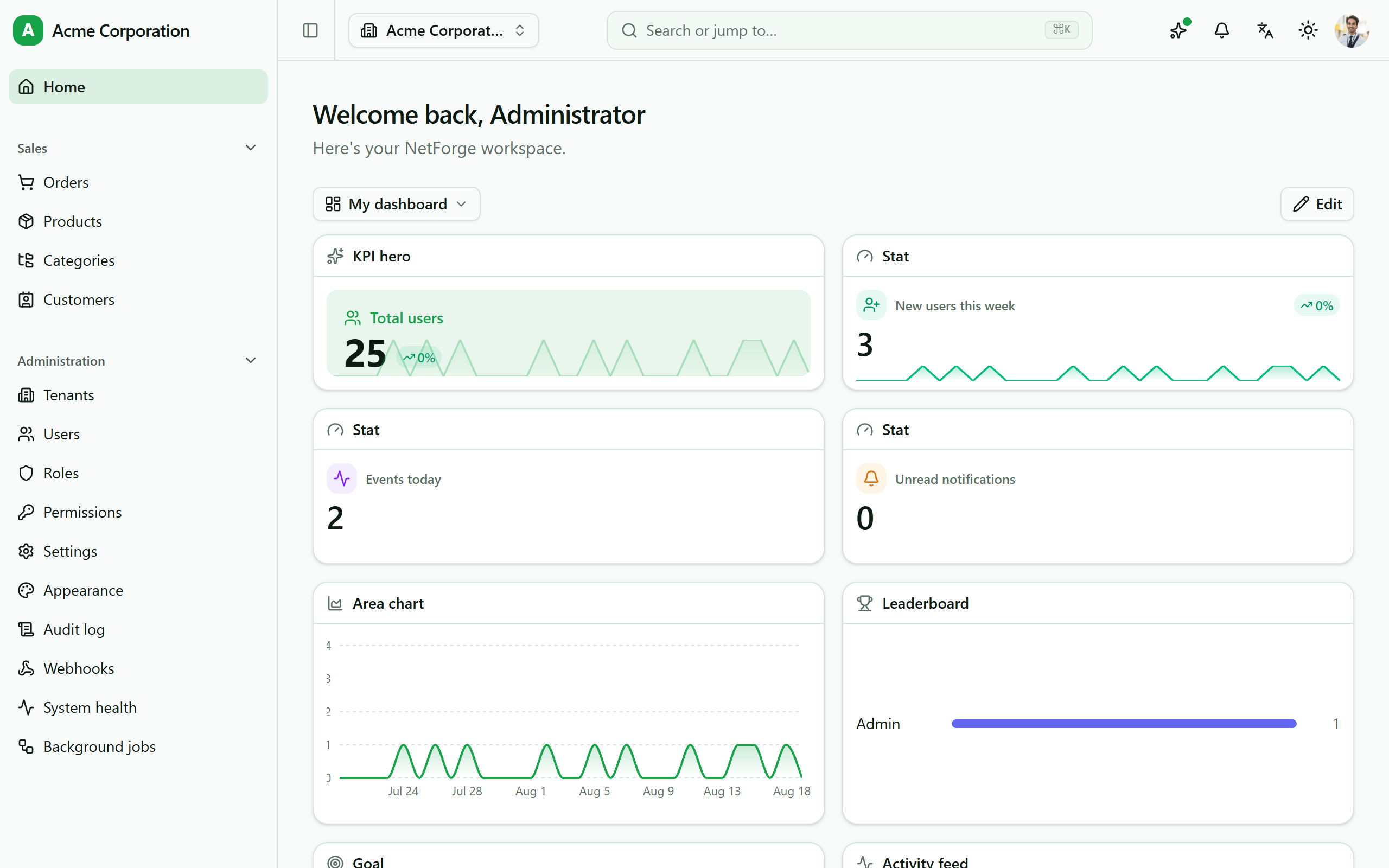
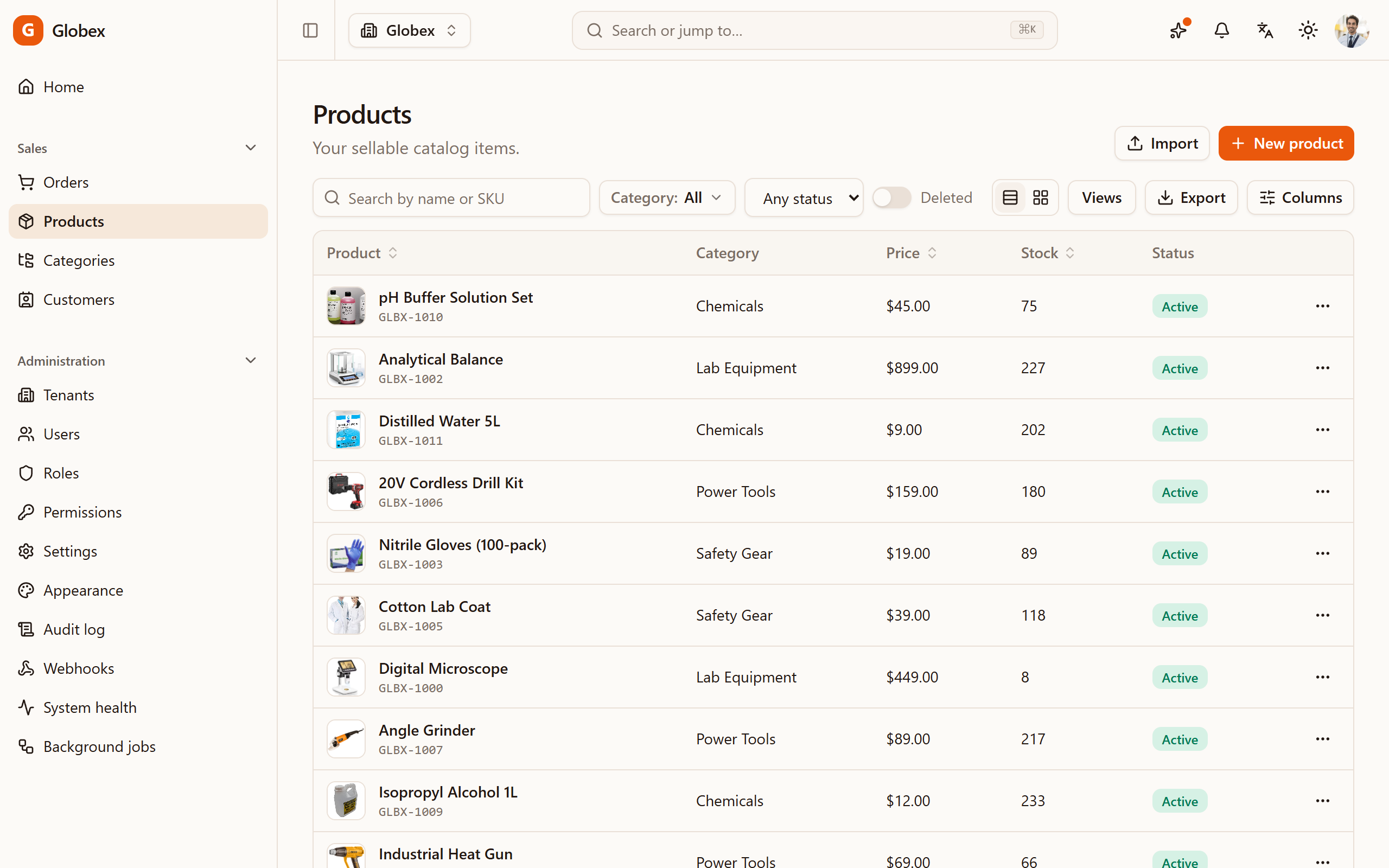
Switching tenant re-skins the whole shell with that tenant's brand — same app, same account, a different identity over a completely isolated data set:
Resolution strategies
The active tenant always derives from the signed-in user, so a forged subdomain or header can't reach a tenant you don't belong to. The strategy decides how an unauthenticated request is mapped:
| Strategy | Example | Best for |
|---|---|---|
| UserClaim | from the signed-in user | localhost / SPA |
| Subdomain | acme.app.com | classic SaaS |
| Path | /acme/… | single-domain hosting |
| Header | X-Tenant-Id | API clients |
Making a feature tenant-aware
Add the ITenantScoped marker to an entity and a global WHERE TenantId = current filter is applied automatically; new rows are stamped with the active tenant on save. That's the whole change — the switcher, invitations, and resolution are already wired. It composes with the normal Add a feature flow: add the marker and the platform does the rest.
Community edition
Multi-tenancy management is a Pro feature; the always-on single-tenant scaffolding stays in every edition. See Editions.